


Get Bitculator on Android
Marketcap:
$1,932,902,784,075
Volume 24h:
$209,175,082,222
Jun 06 Liquidations:
$0
24H Long/Short:
Coming soon
Open Source
What does Open Source mean in crypto terms?
Open source refers to software or code that is freely available to the public.
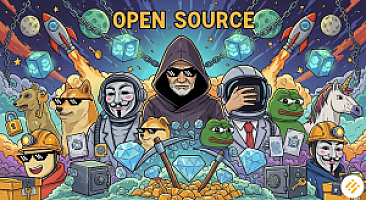
What is Open Source?
Open Source is software with code you can read, use, and improve. Anyone can peek under the hood, suggest changes, or build their own version. Think published recipes, not secret sauce.
“Open Source is less secure.” Not really. With more eyes on the code, bugs get spotted faster and fixes land in the open where everyone can review them.
How Open Source works
Picture a crypto wallet repo. Maintainers publish the code, the crowd inspects it, and improvements flow in. The loop is simple, but strong.
- Step 1: Someone releases code under an open license on a public repo.
- Step 2: Contributors file issues, open pull requests, and review changes.
- Step 3: Maintainers merge the good stuff and tag a new release.
- Step 4: Users test in the wild, report bugs, and request features.
- Step 5: If progress stalls, anyone can fork and build a fresh take.
That feedback loop is the engine, and yes, it really is that simple.
Why Open Source Matters
You care because it touches your money, your data, your tools:
- Benefit: You can verify claims, audit smart contracts, and avoid blind trust.
- Perspective: It lines up with decentralization, where control is spread out, not bottled up.
- Relevance: Most serious DeFi projects publish core code so anyone can check the math.
Before installing, scan the repo for active commits, open issues, tests, and a clear license. It is the fastest path to real transparency.
Key Characteristics of Open Source
What sets it apart, at a glance:
- Public: Code is readable, auditable, and reusable by anyone.
- Forkable: If a project stalls, the community can continue the work.
- Licensed: Permissions and duties are written down, not implied.
- Contrast: With closed-source, you wait for fixes without seeing what changed.
Variations
Not all Open Source licenses feel the same:
- Permissive: Few limits on reuse and remix, common in crypto clients.
- Copyleft: Share alike rules require derived work to stay open.
- Public: Some projects offer code with minimal restrictions for maximum reuse.
Open Source does not mean risk free. Treat audits, reviews, and keys with care, and do not grant permissions you would not accept just because the code is public.
Example
A marketplace for NFTs publishes its smart contracts as Open Source so creators can verify how royalties are paid.
Fun Fact
Linus Torvalds popularized the idea that with enough eyeballs, all bugs are shallow. Bitcoin Core follows that spirit, which helped it gain trust early.
Wrap-Up
Short take: Open Source lets you check the code, spot risks, and choose tools that earn your trust.
Explore Other Crypto Terms
Did you find this term clearly defined?
Did we forget anything?
Your input helps us keep things correct. Contact us if anything is incorrect or missing.
Contact