


Get Bitculator on Android
Marketcap:
$1,949,474,730,593
Volume 24h:
$209,798,866,754
Jun 06 Liquidations:
$0
24H Long/Short:
Coming soon
Smart Contract
What does Smart Contract mean in crypto terms?
A smart contract is a self-executing contract where the terms are embedded in code.
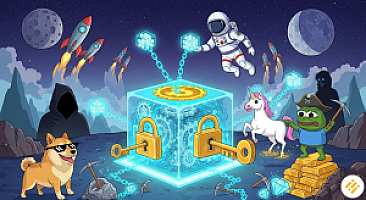
What is Smart Contract?
A Smart Contract is code on a blockchain that runs rules and moves assets when set conditions are met. No manager, no paperwork, just logic. Think vending machine for agreements: you feed it inputs, it checks the terms, and if all is good, it pays out.
“Smart contracts can never change.” Not quite. Blockchains aim for Immutability, but developers can build upgrade paths or admin controls. Good ones make that clear up front.
How a Smart Contract works
Quick walkthrough: say you buy an in game item with crypto and want fairness baked in from the start.
- Trigger: You send a payment that calls the contract.
- Logic: The code checks price, time window, and your address.
- Outcome: If rules match, item transfers to you. If not, you get a refund.
- Record: Every step is written on chain for anyone to verify.
- Trust: The exchange runs in a Trustless way, so you do not need a middleman.
In short, the code keeps score and pays out exactly as written, yes, it is that simple.
Why Smart Contract Matters
Here is why you should care, even if you are just crypto curious:
- Benefit: Fewer intermediaries means lower fees, faster settlement, and rules that do not change mid game.
- Perspective: They run a huge chunk of Decentralized Finance (DeFi), from swaps to lending, but bugs and bad design can still cost money.
- Relevance: You will meet them inside decentralized applications (dApps), DAOs, NFT drops, even gaming.
Before you interact, read the docs, check audits, verify the contract address on a block explorer, and test with a tiny amount first.
Key Characteristics of Smart Contract
What makes them different from regular apps:
- Auto: They execute rules on their own once inputs meet the conditions.
- Open: Blockchains favor Transparency, so code and results can be inspected.
- Final: Once confirmed, transactions are hard to reverse, so mistakes stick.
- Modular: Contracts can call other contracts like digital Lego.
- Global: Anyone with an internet connection can interact without asking permission.
Variations
Different contracts, different jobs:
- Escrow: Holds funds until both sides meet terms.
- Token: Mints and manages fungible assets that follow a standard.
- NFT: Tracks unique items like art, passes, or game gear.
- DAO: Handles votes, proposals, and treasury rules.
- MultiSig: Requires several approvals before funds move.
- Oracle: Uses external data feeds for things like prices or scores.
- Upgradeable: Points to new logic contracts while keeping the same address for data.
Code is law only inside the contract. Off chain promises, user errors, or bad oracles can still burn you.
Example
A Smart Contract on an exchange receives your tokens, checks the pool price, and immediately sends you the swap output without a clerk touching anything.
Fun Fact
Nick Szabo wrote about smart contracts in the 1990s, long before anyone pushed one to a public chain. Ethereum popularized them years later and turned a thought experiment into daily usage.
Wrap-Up
Think of it as code that keeps promises, and does it on schedule without asking for permission.
Explore Other Crypto Terms
Did you find this term clearly defined?
Did we forget anything?
Your input helps us keep things correct. Contact us if anything is incorrect or missing.
Contact