


Get Bitculator on Android
Marketcap:
$1,932,902,784,075
Volume 24h:
$209,175,082,222
Jun 06 Liquidations:
$0
24H Long/Short:
Coming soon
Coin/Token Burn
What does Coin/Token Burn mean in crypto terms?
Token Burn is the process of permanently removing cryptocurrency tokens from circulation, reducing the total supply.
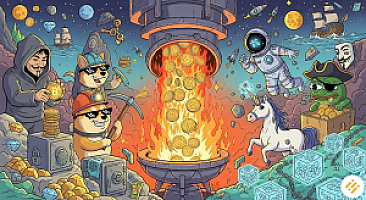
What is Coin/Token Burn?
Coin/Token Burn is the intentional removal of coins or tokens from circulation by sending them to an address no one can use. That trims supply. Think of a brand deleting unsold pairs to keep the drop rare, yes, it is that simple.
Coin/Token Burn always sends price to the moon. Not quite. It lives inside bigger Tokenomics, so demand, timing, and size matter as much as the burn itself.
How Coin/Token Burn works
Quick walkthrough, no fluff. Imagine a project decides to retire some supply after a big milestone.
- Trigger: The team announces a burn or the community votes for it.
- Method: Tokens are sent to a non spendable address or a contract runs a burn function. Example, a pool buys tokens then destroys them.
- Proof: The transaction shows on chain, and explorers update total supply.
- Accounting: The project posts the amount, the block, and the address so anyone can verify.
- Impact: With fewer tokens around, markets decide whether that change feels meaningful.
Yep, that is the idea.
Why Coin/Token Burn Matters
You care because supply meets vibes meets math.
- Benefit: Fewer tokens can support Value Appreciation if demand stays steady or grows.
- Perspective: A tiny burn is marketing, a sizable and repeatable one can change long run supply. Still, weak demand makes any burn feel small.
- Relevance: You will see burns in exchange coins, some layer ones, fee burn models, and even NFT projects.
Always check the burn transaction and whether the contract can mint more later. A permanent burn with unlimited minting turns into a magic trick.
Key Characteristics of Coin/Token Burn
The core traits you will spot again and again:
- Scarcity: Removes supply to increase rarity over time.
- Transparency: Every true burn is visible on chain with a verifiable transaction.
- Finality: Burned tokens are gone for good and cannot be spent.
- Discipline: Some projects tie burns to fees or earnings as a form of Inflation Control.
- Signaling: A well explained burn can show commitment to holders.
How is Coin/Token Burn calculated?
Teams often share the amount removed and the share of total supply affected. Two simple ways to frame it:
New supply after burn:
NewSupply = OldSupply - BurnAmount Burn rate as a percent of current supply:
BurnRatePercent = (BurnAmount / OldSupply) * 100 Variations
Burns come in a few flavors:
- Manual: One off decision by a team or a vote.
- Auto: Programmed into the protocol on a set schedule or based on activity.
- Fee: A slice of every transaction is destroyed.
- Buyback: The project buys tokens on the market then burns them.
A burn can help, but demand and utility run the show. Clear communication builds Market Confidence more than a flashy number ever will.
Example
BNB runs a periodic auto burn, publishes the transaction, and anyone can confirm the reduced supply on a block explorer.
Fun Fact
Proof of Burn was pitched as a way to earn mining rights by destroying coins, which is delightfully crypto: prove commitment by giving something up.
Wrap-Up
In one line, Coin/Token Burn trims supply to shape incentives, not to promise a moonshot.
Explore Other Crypto Terms
Did you find this term clearly defined?
Did we forget anything?
Your input helps us keep things correct. Contact us if anything is incorrect or missing.
Contact